When a Reddit post about an unjust HOA fine attracts nearly 2,000 upvotes, you’re witnessing more than viral content—you’re seeing a market signal. IdeaHunter’s database flagged this opportunity with an impressive 10/10 opportunity score and 8/10 feasibility score, identifying a genuine gap in a crowded market. The premise is deceptively simple: homeowners are unfairly penalized by HOAs for neighbor-related nuisances they cannot control, such as pet waste near property boundaries, leading to frustration over lack of accountability and dispute resolution tools.
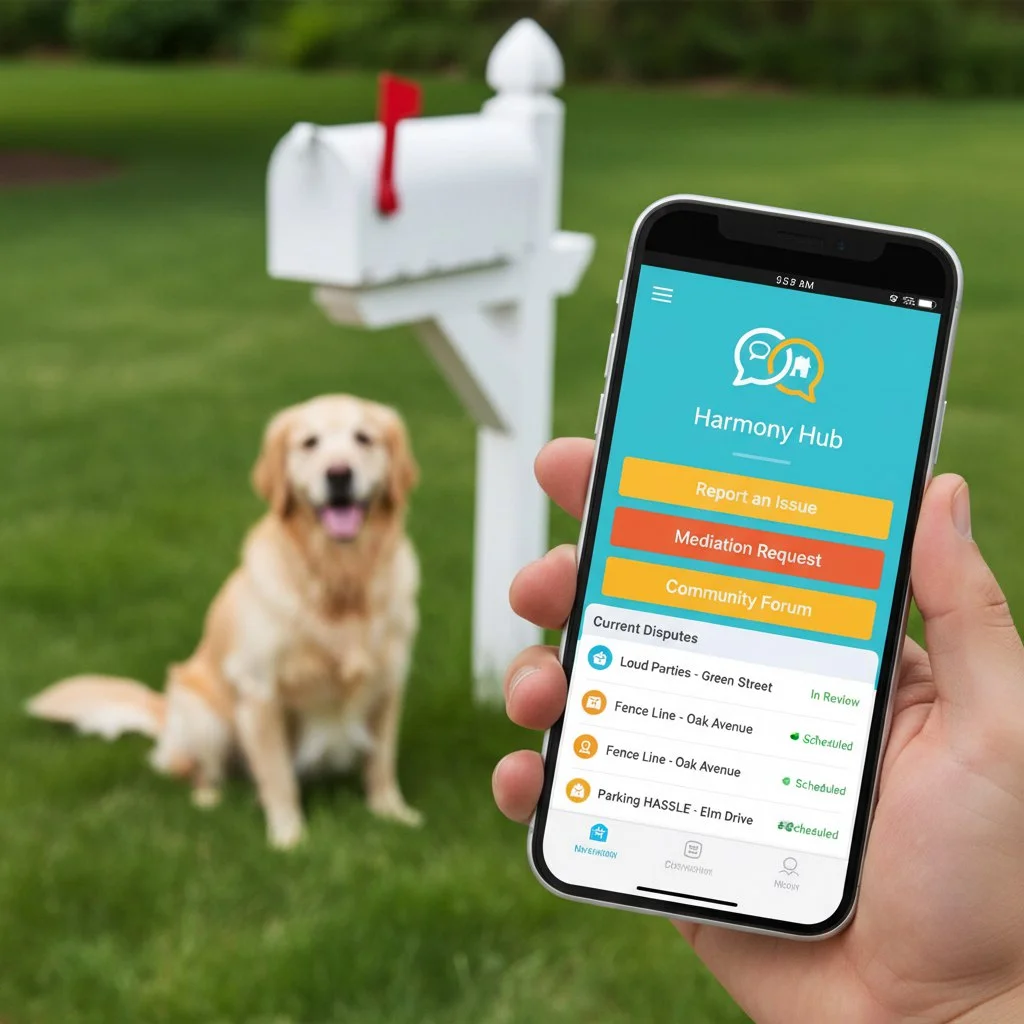
But here’s where it gets interesting. The proposed solution—a mobile-first app tentatively called “Neighborly”—isn’t trying to be another community bulletin board. It’s positioning itself as something more visceral: a platform that turns personal grievances into shareable, socially validated content with built-in humor and outrage, making it inherently viral. Unlike passive forums, it enables action, evidence, and public shaming (opt-in), creating a cathartic user experience that users actually want to share after being wronged.
The question isn’t whether people want this. The market has already answered. The real question is whether a newcomer can wrestle market share from entrenched giants like Nextdoor and Ring Neighbors—and survive long enough to prove the concept works.
The Incumbents: Dominant But Vulnerable
Nextdoor: The Friendly Giant with a Focus Problem
Nextdoor owns the neighborhood social network category with over 300 million users globally. They’ve built trust, achieved critical mass in countless neighborhoods, and established themselves as the default platform for local community engagement. Their verified address system creates legitimacy. Their moderation keeps things relatively civil. They’ve even attracted serious advertisers who see value in hyperlocal targeting.
But Nextdoor’s strength is also its fatal flaw: generalization.
The platform tries to be everything to everyone—lost pets, garage sales, crime reports, recommendations for plumbers, political arguments about street parking. This creates enormous noise that drowns out specific use cases. When someone has a legitimate HOA grievance with documented evidence, Nextdoor offers them… a text post that will get buried under fifty comments about someone’s missing cat and a heated debate about lawn care services.
Current apps focus on general neighborhood chatter or crime, not targeted HOA-specific nuisance disputes with verifiable evidence workflows. They lack structured reporting, proof validation, and emotional resonance for everyday micro-injustices. Nextdoor’s moderation policies actually work against confrontation—the very thing that makes HOA disputes compelling. The platform discourages naming and shaming, which eliminates the accountability mechanism that victims of HOA injustice desperately want.
Nextdoor’s business model compounds the problem. They’ve optimized for advertising revenue, which means maximizing time on platform and broad appeal. They can’t afford to become “the HOA drama app” because it would alienate their mainstream user base and advertisers seeking positive brand association.
Ring Neighbors: The Safety-First App That Misses the Emotional Mark
Amazon’s Ring Neighbors took a different approach, leveraging Ring’s doorbell camera ecosystem to create a crime-and-safety-focused community app. If someone steals a package or a suspicious person is lurking, Ring Neighbors excels at rapid information sharing with video evidence baked in.
For actual crime, this works beautifully. The app has helped solve real crimes and prevented others through community awareness.
But HOA disputes aren’t crimes. They’re injustices—a completely different emotional category.
Ring Neighbors’ serious, security-focused interface creates the wrong context for sharing that your neighbor’s dog destroyed your flowerbed or that the HOA fined you for someone else’s violation. The platform lacks any mechanism for dispute resolution, social accountability, or that crucial element of catharsis that victims of petty tyranny crave. You can report a problem, but then what? The app offers no pathway to justice, no community validation, no resolution.
Ring also faces the Amazon trust problem. After years of privacy concerns and police partnership controversies, many users are wary of feeding more neighborhood data to Amazon’s surveillance ecosystem. An HOA dispute app needs to feel empowering, not like you’re building a corporate dossier on your neighbors.
The Challenger’s Weapons: Purpose-Built for Righteous Anger
Remember Yelp’s early days? Established review sites like CitySearch existed, but they were directories with some user feedback. Yelp understood something deeper: people don’t just want to rate businesses—they want to tell stories about being wronged, and they want those stories to have consequences. That emotional insight built a multi-billion dollar company.
Neighborly is pursuing a similar strategy, but for a different villain: the unjust HOA and the problematic neighbor.
The Evidence Workflow Advantage
The proposed MVP features reveal the strategic thinking: incident capture with camera plus GPS verification, one-tap HOA violation report generator, and private neighbor tagging with an opt-in community network. This isn’t a social network pretending to solve disputes—it’s a dispute resolution tool that happens to have social features.
The workflow matters enormously. When you’re fined $150 because someone else’s dog created a mess near your property line, you’re not looking for a place to chat about it. You want three things: documentation that proves your innocence, a formal channel to contest the fine, and social validation that this situation is as absurd as it feels.
Neighborly gives you all three in a structured process. Snap photo. GPS stamps the location. App generates a formatted dispute letter citing your evidence. Tag the actual responsible party (if they’re on the platform). Share the whole story to gather community support. This transforms rage into action.
Nextdoor can’t offer this without completely rebuilding their platform. Ring Neighbors won’t, because it’s off-brand for Amazon’s security positioning.
The Viral Mechanics of Micro-Injustice
Here’s where the challenger’s strategy gets clever. The differentiation explicitly calls out creating “shareable, socially validated content with built-in humor and outrage.” This recognizes a fundamental truth about viral content: nothing spreads faster than a story where someone is clearly, absurdly wronged.
The “Good Neighbor Score” gamification and anonymized story sharing features turn each HOA injustice into potential viral content. Not in a mean-spirited way, but in a “can you believe this happened?” way that resonates across social platforms. Someone fined for a neighbor’s dog creates a shareable story template. The ridiculousness is the feature.
Think about how quickly Ring doorbell videos of package thieves spread across Facebook and Twitter. Now imagine that same shareability applied to HOA overreach and neighbor disputes, but with better storytelling structure and a clear call-to-action: “Download Neighborly to document your own HOA nightmares.”
Each shared story becomes a acquisition channel. The $4.2 billion TAM estimate suddenly seems accessible when your marketing is built into the product experience.
The Catharsis Factor
Psychology matters more than features. Passive forums don’t satisfy the emotional need created by an unjust fine or a neighbor who won’t control their pet. You need action, accountability, and ideally, vindication.
The opt-in public shaming (carefully positioned as “accountability”) gives users a pressure valve. The peer mediation feature offers hope for resolution. The ability to build a verified evidence dossier provides agency in an otherwise powerless situation. This isn’t about being mean—it’s about having options when you’ve been wronged.
Traditional platforms worry too much about keeping everyone happy. A purpose-built tool can optimize for victim satisfaction instead, knowing that empowering the wronged party is the core value proposition.
How the Giants Will Respond (And Why They’ll Stumble)
Nextdoor’s Likely Play: Feature Addition That Misses the Point
Expect Nextdoor to eventually add some kind of “HOA Tools” section or dispute reporting feature. It’ll be professionally designed, well-integrated into their existing platform, and completely miss the emotional resonance that makes a specialized tool valuable.
Why will they fail? Because Nextdoor can’t embrace the accountability and light shaming that makes the concept work without alienating their core user base and moderation philosophy. They’ll create a sanitized version that feels like filing paperwork, not seeking justice. The viral sharing mechanism won’t work when it’s buried in a general-purpose platform. And crucially, their advertising model means they’ll never optimize for the confrontational content that drives engagement in dispute scenarios.
They might capture some of the market by default (they already have the users), but they won’t own the category.
Ring’s Response: Probably Nothing
Amazon is unlikely to pivot Ring Neighbors toward HOA disputes. It’s off-brand, legally complicated, and risks association with neighborhood conflict rather than neighborhood safety. They might add incident reporting features, but without the social validation and cathartic elements, it becomes just another data collection tool.
Their advantage is distribution through Ring device sales, but that same advantage creates constraints. Ring needs to be family-friendly and broadly appealing. An HOA dispute focus narrows the audience in ways Amazon won’t accept.
The Market Entry Strategy: Guerrilla Tactics, Not Frontal Assault
Can anyone challenge platforms with hundreds of millions of users? Only by not challenging them directly.
The Vertical Focus Advantage
The smart play here is relentless focus on HOA communities specifically. Not all neighborhoods—just the 73+ million Americans living in HOA-governed communities who face the unique frustration of being subject to neighbor-created problems enforced by association bureaucracy.
This focus allows for targeted marketing. Facebook ads targeting HOA-related groups. Reddit outreach in r/fuckHOA and similar communities (yes, that’s a real subreddit with substantial membership). Partnerships with HOA management software companies who might want to reduce dispute volume. Direct outreach to HOA board members frustrated with their current complaint processes.
Nextdoor has to appeal to everyone. Neighborly only has to appeal to people who’ve been wronged by their HOA or a neighbor. That’s a smaller market, but with much higher pain levels and willingness to try new solutions.
The Content-as-Acquisition Strategy
The viral sharing features aren’t just engagement mechanisms—they’re the primary acquisition channel. Each absurd HOA story that spreads across social media with “documented on Neighborly” becomes an advertisement with inherent credibility.
This is where the freemium model shines. Free users become marketers by sharing their stories. The app spreads organically through the natural human impulse to share injustice stories. Initial acquisition channels like viral sharing, social media, and app store optimization require relatively modest investment compared to competing with Nextdoor’s marketing budget.
The challenge is reaching critical mass in individual HOA communities quickly enough that the network effects kick in before users churn.
The Premium Monetization Gamble
The revenue model proposes freemium with $1.99-9.99/month premium tiers and a target ARPU of $1-10. This is simultaneously the biggest opportunity and the biggest risk.
Can you convince people to pay for dispute documentation tools? Maybe. If the free tier offers viral sharing and basic incident capture, but the premium tier includes automated HOA letter generation, unlimited evidence storage, access to peer mediation, and priority placement on community boards, there’s a value proposition.
But user acquisition cost will be the killer. The major risks explicitly call out “user acquisition cost; viral mechanics failure; monetization challenges” as primary concerns. If the viral loop doesn’t work, you’re stuck with expensive paid acquisition in a market where the incumbents are free.
The realistic scenario is probably lower monetization than projected, with revenue coming more from HOA management B2B partnerships than consumer subscriptions. An HOA board paying $500/year for dispute management tools is more plausible than 500 residents paying $1/month each.
The Honest Assessment: Probability and Pathways
Does this challenger have a realistic shot against Nextdoor and Ring? Yes, but the path is narrow and requires near-perfect execution on several fronts.
What Has to Go Right:
The viral mechanics must work from day one. If early users don’t share their stories widely, the organic growth engine never starts. This requires intuitive sharing features and content that’s genuinely compelling—funny, outrageous, relatable. The 3-6 month MVP timeline is aggressive but necessary to capitalize on market momentum before incumbents respond.
Critical mass in target HOAs needs to happen fast. The app is more valuable when multiple neighbors in your community use it. That means concentrated geographic launches (specific HOA communities in specific cities) rather than broad distribution. Think of how Facebook started with individual colleges before expanding.
The tone must stay on the right side of the line between accountability and harassment. Position this wrong, and you create a toxic platform that faces app store removal or legal challenges. The opt-in mechanisms and moderation need to work well enough to avoid becoming a pure attack platform while maintaining the emotional satisfaction users seek.
HOA partnerships or integrations become critical for legitimacy. If major HOA management companies integrate Neighborly documentation into their official processes, it transitions from “angry neighbor app” to “legitimate dispute resolution tool.” That’s worth pursuing aggressively.
What Will Probably Go Wrong:
User acquisition costs will likely exceed projections. Even with viral mechanics, converting viewers to users to paying customers is expensive. The major risks are explicit about this concern, and it’s well-founded.
Monetization will be harder than expected. Most people won’t pay for this. The path to profitability probably requires pivoting toward B2B (selling to HOA boards or management companies) or accepting lower ARPU with much higher user counts.
Incumbent response might be faster than anticipated. If Neighborly gains real traction, Nextdoor could buy them, copy them, or undercut them before sustainable business develops. The integration_needed dependencies on social media platforms, camera access, and location services create vulnerabilities if platform policies change.
The Realistic Probability: 25-35% Chance of Significant Success
This isn’t pessimism—it’s honest assessment. Most apps fail. Most challengers to entrenched platforms fail. The execution requirements here are significant, and the margin for error is small.
But the 25-35% success probability is actually higher than most app challenges to billion-dollar incumbents, because the market gap is real and the emotional resonance is strong. Current apps focus on general neighborhood chatter or crime, not targeted HOA-specific nuisance disputes with verifiable evidence workflows. They lack structured reporting, proof validation, and emotional resonance for everyday micro-injustices. That’s not a small gap—it’s a missing category.
The platform dependencies and medium technical complexity make this achievable for a well-funded team. The low competition level in this specific niche (HOA dispute documentation) provides runway to establish the category before others pile in. And that 1,996 upvotes on a single Reddit post about an HOA injustice signals genuine market demand waiting to be served.
The Verdict: A Winnable Battle With Asymmetric Weapons
Can a specialized HOA dispute app beat Nextdoor and Ring in the broader neighborhood app market? No, and it shouldn’t try.
Can a purpose-built tool capture significant share of the HOA dispute documentation and resolution category while the generalist platforms ignore it or botch their response? Absolutely.
The key insight is recognizing this isn’t about building a better Nextdoor. It’s about creating a category Nextdoor can’t own because their incentives and design philosophy won’t let them optimize for confrontation, accountability, and catharsis.
Ring won’t pivot from security to social disputes. Nextdoor won’t embrace the controlled shaming and viral outrage that makes this concept work. That creates genuine white space for a challenger willing to focus ruthlessly on a specific, underserved audience with intense pain points.
The path requires accepting a smaller total addressable market than the giants, building viral mechanics into the core product experience, reaching critical mass in specific communities quickly, and probably pivoting the business model toward B2B once the consumer side proves the concept.
It won’t be easy. The major risks of user acquisition costs, viral mechanics failure, and monetization challenges are all legitimate and likely. But the opportunity score of 10/10 reflects something important: when thousands of people passionately upvote a story about HOA injustice, they’re not just sympathizing—they’re signaling a willingness to use tools that address their own frustrations.
The giants will respond eventually, but slowly and imperfectly. That window might be enough for a focused challenger to own the category and become the verb: “Did you Neighborly that violation?” The incumbents have users and resources, but the challenger has clarity of purpose and emotional alignment with a specific audience’s deep frustrations.
In the battle between generalists and specialists, the specialist usually loses—unless they’re solving a problem the generalist doesn’t even recognize as important. HOA dispute documentation with viral sharing and structured accountability sits firmly in that exception category.
Ready to spot the next market gap before the incumbents even notice? Explore more validated opportunities and competitive insights in IdeaHunter’s regularly updated database at IdeaHunter.ai.